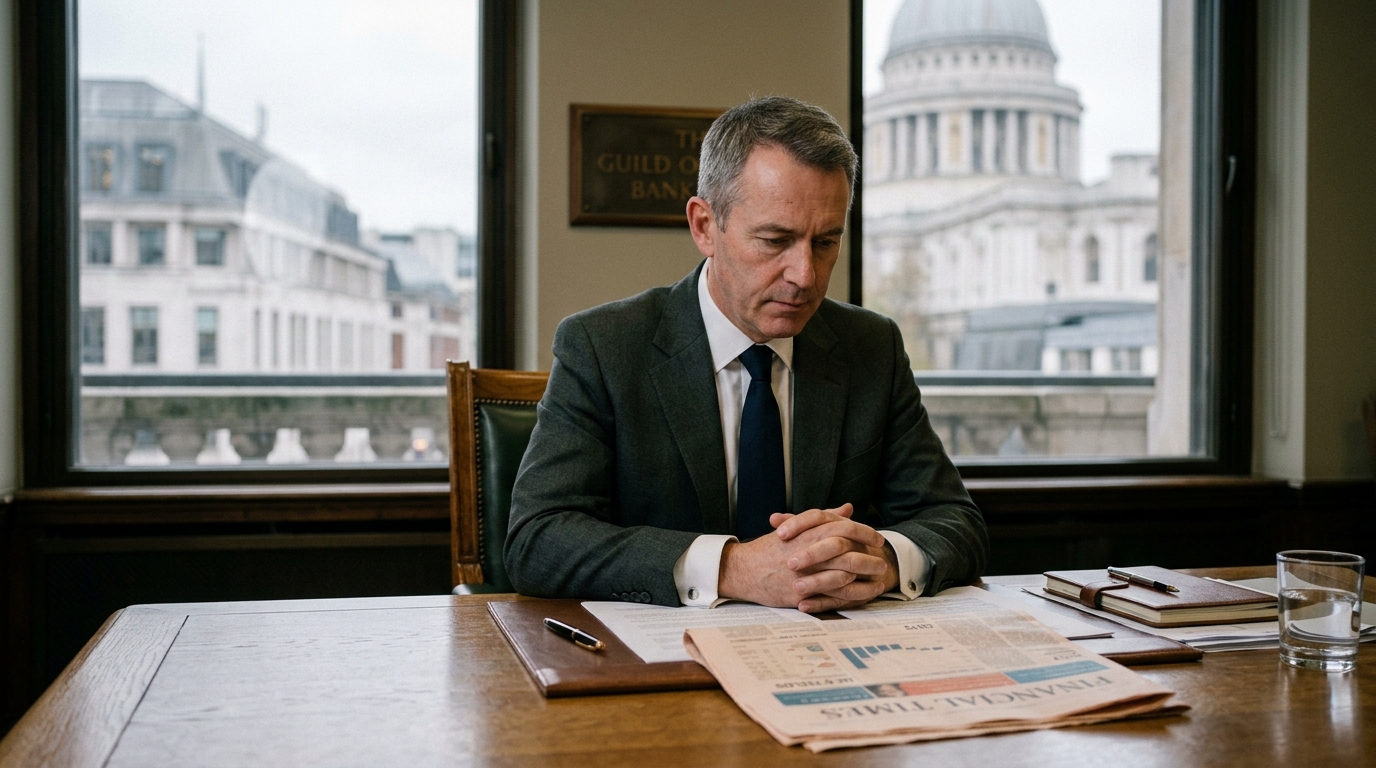
Eight days before the October 28 Budget, Chancellor John Healey has narrowed his revenue options to one. Healey will not increase the UK’s tax on capital gains and will rely instead on a levy on bank revenues to fund the Labour government’s plans. He ruled out the move after being warned that higher capital gains taxes could ultimately reduce government revenues if wealthy individuals left Britain or delayed selling assets. The rationale is defensible. The arithmetic is tight.
The gilt market has been running its own commentary for weeks. British 30-year bond yields rose to a 28-year high on October 7 as a global bond selloff added to pressure on Healey ahead of his first budget, with yields peaking at 6.036%, their highest since January 1998. The move reflects a confluence of factors: energy-driven inflation risk, expectations of tighter Bank of England policy, heavy gilt supply, and fiscal uncertainty ahead of the October 28 budget. When markets price long-dated UK debt at levels not seen since the late 1990s, they are telling you something about how confident they are in the path of public borrowing. Healey’s choice to abandon one major revenue source does nothing to quiet that signal.
This morning’s ONS data made the backdrop harder. Vacancies recorded their largest quarterly fall since the start of the year, dropping to 691,000, the lowest level outside the pandemic since July to September 2014. The ONS said feedback from its Vacancy Survey continues to suggest that smaller firms may not be recruiting because of increases in labour costs. That is not the profile of an economy that can easily absorb a further tightening of business conditions, and it complicates the growth argument Healey is using to justify sparing capital gains.
Which brings the full weight of fiscal credibility to the banks. Healey is expected to raise the sector-specific surcharge on banks’ profits to 8%, up from 3%, when he delivers his first budget. The surcharge, which sits on top of corporation tax, was cut to 3% from 8% from April 2023 following changes announced under Rishi Sunak; while the hike could raise more than £2 billion per year for the UK Treasury, it could also slice 6% off lenders’ earnings, according to KBW analysts. The TUC has pushed for at least that, with unions proposing to reverse the cuts to the bank surcharge, increasing it from 3% back to 8%, to raise £9bn over four years.
The exposure is not evenly distributed. Lloyds and NatWest, which are almost entirely exposed to the UK market, would likely bear the brunt of any new levy; Barclays has partial exposure, while HSBC is the least affected among the major lenders. HSBC, NatWest, Barclays and Lloyds reported combined profits of around £38.8 billion in the first half of 2026. Strong numbers. But strong profits are also what makes this a politically convenient rather than economically straightforward target.
The counterargument is serious. UK Finance, which represents the banks, warned that further increases in bank taxes would weaken competitiveness, discourage investment and job creation, and work against the government’s ambition to deliver growth in every postcode. Banks do pay standard corporation tax, plus a 3% surcharge on profits above £100m, as well as a separate levy on their balance sheets. The industry’s argument is not about sympathy. It is about whether you can draw more from a well without reducing how much the well produces.
September CPI lands tomorrow, and the reading will either add pressure to the long end of the gilt market or offer a brief reprieve. Lloyds reports the day after the Budget. NatWest follows two days afterwards, and both will give their verdicts on any decision by the Chancellor. Those results, set against whatever the surcharge lands at, will tell investors whether the banks can absorb the hit or whether the earnings downgrades are just beginning. Watch the 30-year gilt yield, too. If it keeps climbing after October 28, it means the bond market has decided that sparing capital gains and taxing banks was not enough.