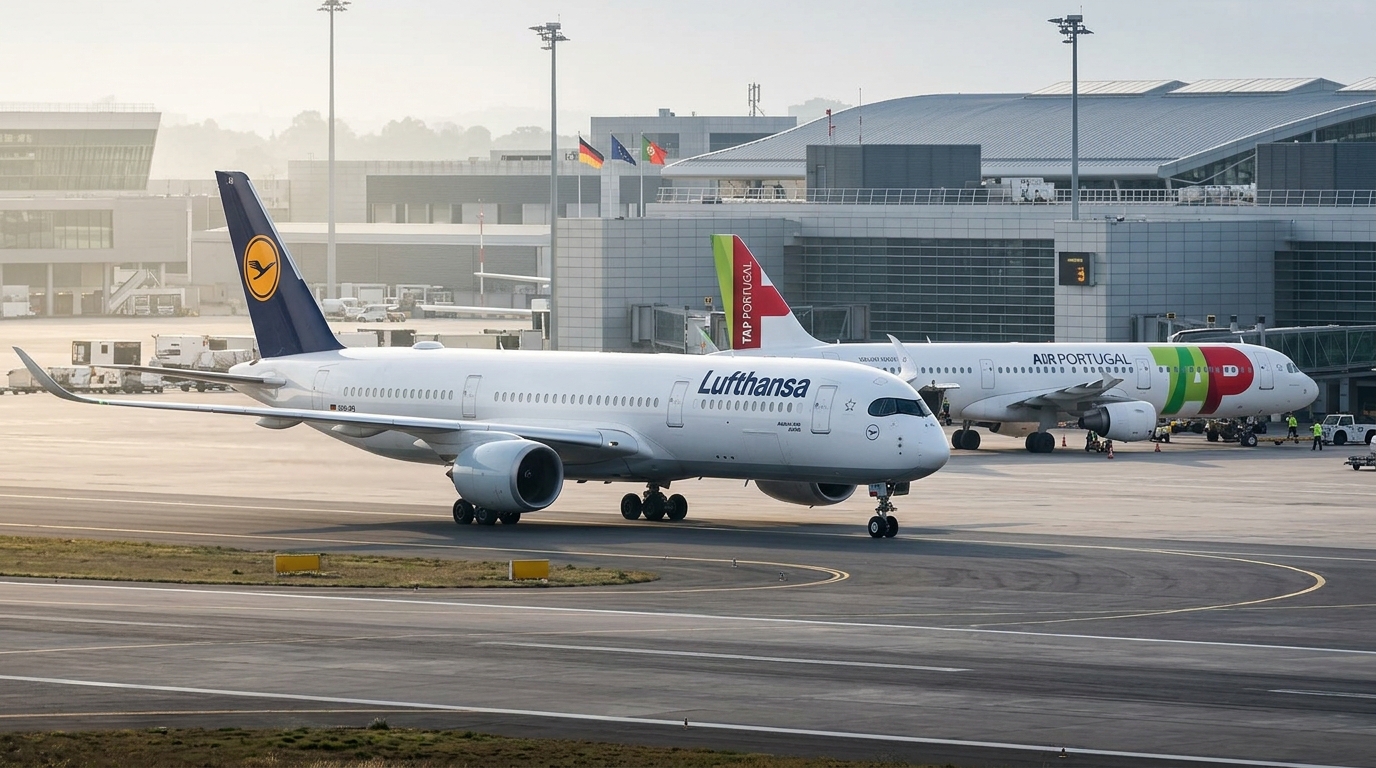
Two days ago, Portugal chose Lufthansa over Air France-KLM to buy an initial 44.9% of TAP Air Portugal for €1.025 billion, a price that could rise to as much as €1.2 billion if Lufthansa’s stake increases to 49.9% (depending on employee share take-up and a ticking fee). The day after that, Lufthansa’s finance chief confirmed the German group is already in separate talks to acquire the remaining 50.1% the Portuguese state is keeping for now. That is not a company being handed a minority stake and going home, that is a company executing a specific plan, faster than the market expected.
Why This Stock Now
CEO Carsten Spohr described Portugal as an attractive growth economy and TAP as a strategic gateway to Latin America, particularly Brazil. That framing matters because it explains what Lufthansa actually paid for. TAP’s Brazil network is a core part of the strategic logic, along with its links into Lusophone Africa. No amount of organic route-building replicates that position quickly. Lufthansa bought the rights as much as the airline.
The Business
Lufthansa already controls SWISS, Austrian Airlines, Brussels Airlines, and holds a stake in ITA Airways, making TAP another important addition to its expanding European portfolio. In its presentation to investors around the TAP transaction, Lufthansa positioned Lisbon as its key long-haul gateway toward the South Atlantic, with Porto expected to play a supporting role. The multi-hub model is deliberate: each acquisition reduces Lufthansa’s dependence on Frankfurt and Munich, where capacity is constrained and competition is fierce.
Within the framework of commercial integration, TAP is expected to remain in the Star Alliance and to deepen coordination with Lufthansa’s transatlantic joint venture partners United Airlines and Air Canada, allowing for greater coordination of schedules, prices, and offers on connections between Europe and North America.
Why Wall Street Is Paying Attention
CFO Till Streichert said Lufthansa has identified around €450 million in total synergies from the TAP transaction. Synergy estimates from management deserve skepticism, they almost always do, but the number gives investors a concrete target against which to measure execution over the next two years.
TAP carried a record 8.2 million passengers in the first half of 2026, up 4.2% year-on-year, while operating revenue rose 4.3%. That is not a distressed demand backdrop, which gives Lufthansa a more stable platform to work from than it faced when it first moved into ITA Airways in Italy.
Separate talks are being held about Lufthansa potentially taking the remaining 50.1% majority stake in Portugal’s flag carrier TAP from the government in the future, Lufthansa’s finance chief confirmed on Thursday. Lisbon needs opposition support to sell its controlling stake, which introduces political risk, but the government’s willingness to signal that conversation publicly is itself a significant development.
What Could Go Wrong
The counterarguments are real. TAP posted a loss of €99.2 million in the first half of 2026, 40% higher than a year earlier. Lufthansa is absorbing a loss-making carrier into a group already under earnings pressure. Second-quarter 2026 adjusted EBIT fell sharply from €870 million a year earlier to €383 million, with management attributing the decline primarily to roughly €750 million in additional fuel expenses and at least €150 million in strike-related costs.
Lufthansa narrowed 2026 adjusted EBIT guidance to €1.7–2.2 billion, down from a prior forecast of significantly above 2025’s €1.96 billion, with capacity now seen broadly flat. That is a wide range, and fuel remains the wildcard. The deal also needs EU regulatory approval, with Portugal’s finance minister Joaquim Miranda Sarmento indicating the review could take 18 to 24 months, which would likely push completion into 2028. A lot can change between now and then.
The analyst community is divided. The average 12-month price target from 18 analysts sits at €9.30, implying roughly 32% upside from the current price around €7.05. But Morgan Stanley carries a Sell rating with a €6.50 target, while Barclays is similarly cautious, citing fuel exposure and execution risk.
The Bottom Line
Lufthansa at roughly €7 per share is trading near the lower end of its recent range, at a forward P/E of about 6.4 times, while acquiring what is arguably the best South Atlantic route network available to any European carrier. The TAP deal is not cheap, and integration through 2028 means this is a patience trade rather than a near-term catalyst. Q3 results land November 3, 2026 and will tell investors whether fuel costs are stabilizing or still squeezing margins.
For investors who believe European aviation consolidation is inevitable and that Lufthansa’s multi-hub model is structurally superior, this week’s TAP announcement is the strongest evidence yet that management is executing rather than talking. The price reflects plenty of doubt. Whether that doubt is the opportunity is the question worth sitting with.