Government money has started whole industries before. The interstate highway system built Caterpillar. The Apollo program built Texas Instruments. When Washington announces a multi-billion-dollar science initiative, the instinct is to buy every name attached to the press release. That instinct is usually wrong.
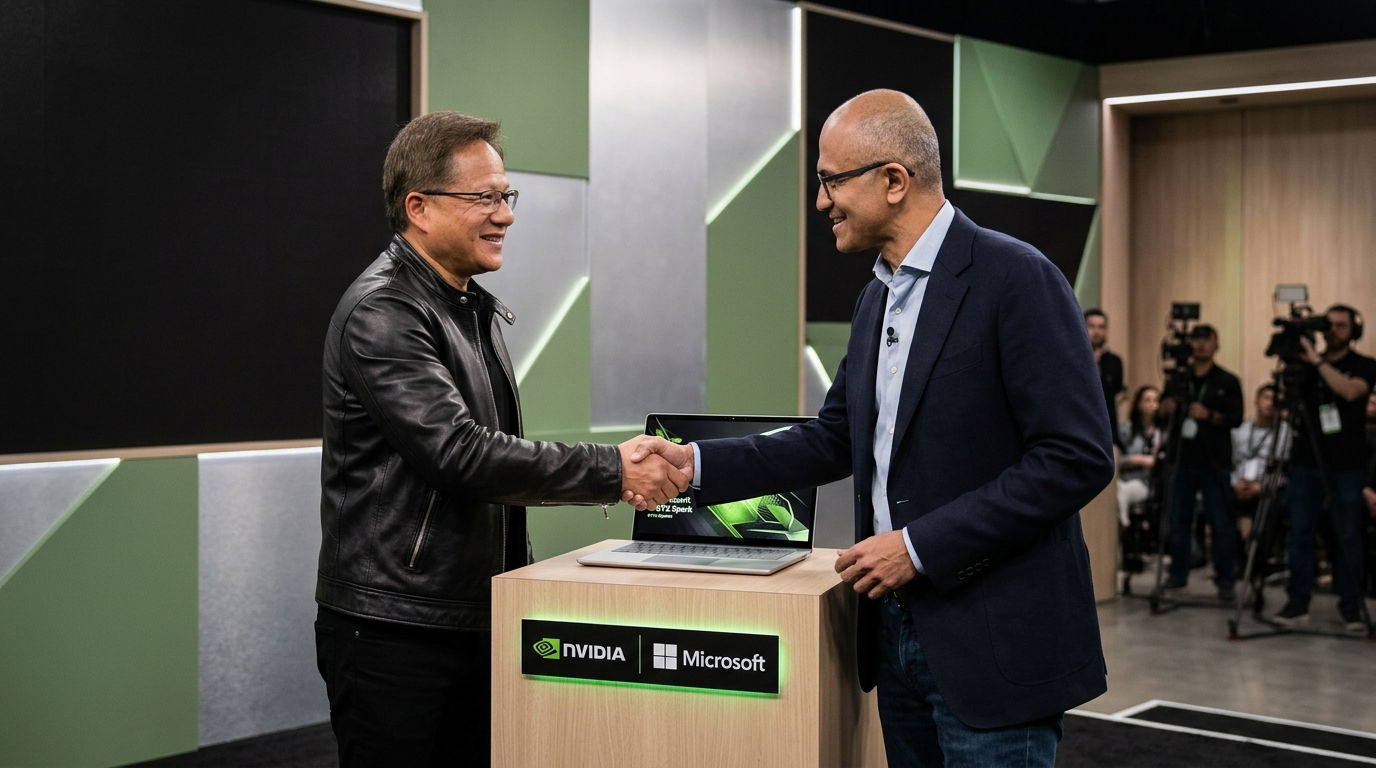
Last Thursday, the Trump administration held its Science: A New Golden Age summit. On October 8, 2026, the White House announced more than $6 billion in science initiatives spanning federal research, industry, universities, and philanthropy. The number that moved markets was smaller and more specific: eleven companies pledged $2.4 billion in computing credits and AI tools to support DOE’s Genesis Mission, including $1 billion from Nvidia, $500 million from AMD, and $200 million from OpenAI. Anthropic and Google each pledged $150 million. AWS, Armada, Crusoe, and Micron each committed $50 million. Two other companies, AMP and Emerald AI, pledged $100 million apiece.
Before sizing any position, read the fine print. The commitments are primarily pledges of computing capacity, cloud access, AI-model access, credits, and training rather than direct federal spending. Credits against a vendor’s list price are not equivalent to cash. That caveat applies unevenly across the eleven names.
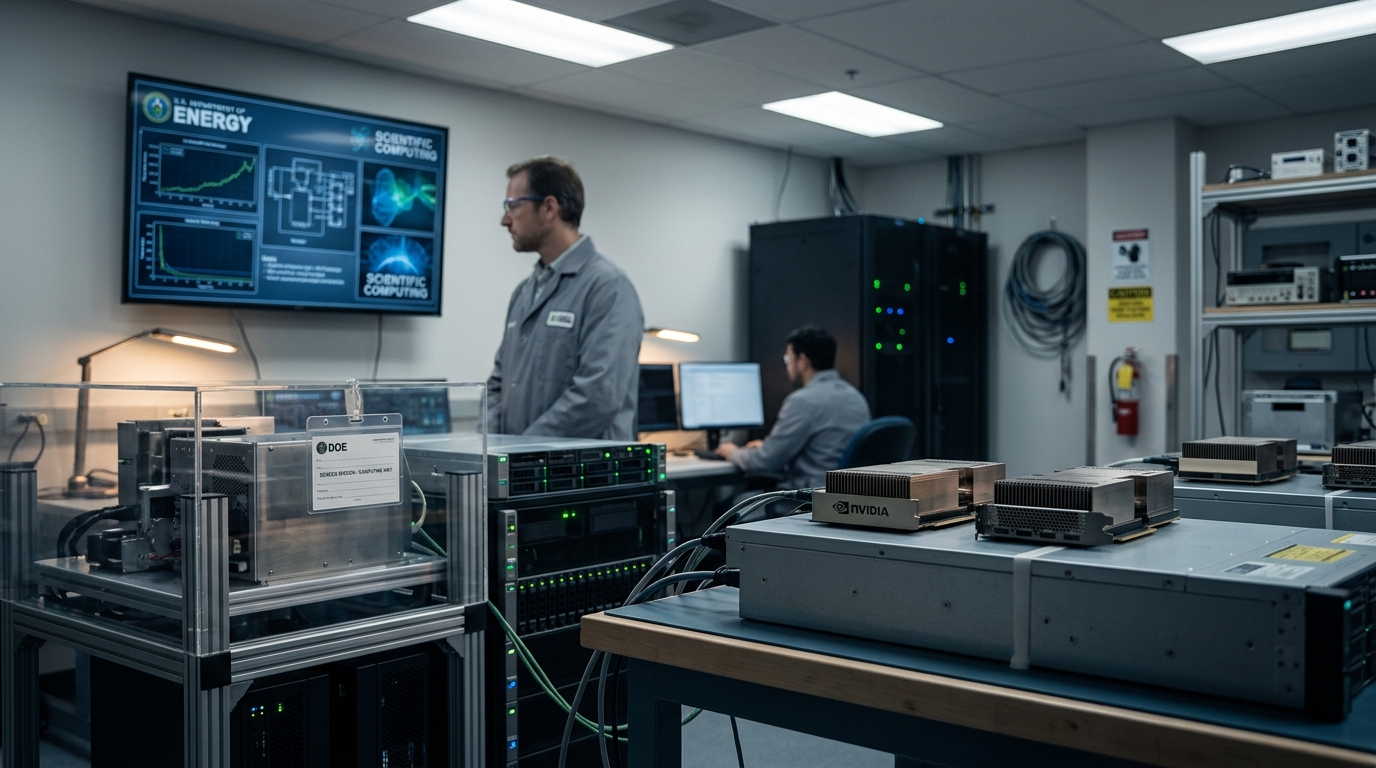
Nvidia sits in a different category from the rest. Nvidia has collaborated with U.S. national labs for more than two decades and in December 2025 highlighted its partnership with the DOE on the Genesis Mission, including work with Oracle to build what it describes as the department’s largest supercomputer for scientific research at Argonne National Laboratory. That is concrete infrastructure, not a marketing pledge. That work includes developing what Nvidia describes as the DOE’s largest scientific research supercomputer at Argonne National Laboratory, and Nvidia is supporting seven additional systems across Argonne and Los Alamos national laboratories. Hardware already in the ground generates revenue. Pledges generate goodwill.
Google and AWS are real participants, but neither pledged more than $150 million and $50 million respectively, and for two companies of their scale those figures are rounding errors. The strategic value is positioning, not revenue.
The more interesting story is in the DOE’s parallel spending. The Department of Energy announced $159 million for 12 new Phase II Genesis Mission projects, bringing the total number of funded Phase II projects to 14. This is appropriated money with named awardees. For pure-play quantum firms like IonQ and Rigetti, the more relevant program is the Quantum Genesis Q Competition, an initiative with up to $215 million in planned funding that DOE announced on September 17, 2026. The competition is milestone-based and is aimed at demonstrating the world’s first fault-tolerant, scientifically relevant quantum computers, with funding beyond initial fiscal-year dollars contingent on congressional appropriations. Both are natural entrants, but the competition pays for results, not proximity to the summit podium.
IonQ has genuine operational momentum behind any federal tailwind. IonQ completed its acquisition of SkyWater Technology on July 31, 2026. IonQ has not guided to $450 million to $460 million of 2026 revenue. Earlier in 2026, IonQ projected full-year 2026 revenue of $225 million to $245 million, and said that guidance did not include SkyWater because the deal had not yet closed. Rigetti’s revenue base remains far smaller and its gross margins have been pressured by contract mix in recent filings. The federal catalyst is real for both, but the quality of the underlying business is not equivalent.
The Genesis Mission is a genuine long-term program, not a one-week photo opportunity. The initiative’s stated ambition is to harness AI, quantum computing, and high-performance computing to accelerate scientific discovery and substantially lift U.S. research productivity over the next decade. Programs with that kind of mandate historically do create durable commercial relationships. But the companies that win are the ones with hardware, contracts, and engineers already inside the national laboratory system. For now, only one name in the $2.4 billion announcement meets that standard clearly. The rest are standing nearby.