Start with a simple fact the AI industry would rather not discuss: every time a large language model responds to your prompt, it doesn’t just consume electricity. It consumes water.
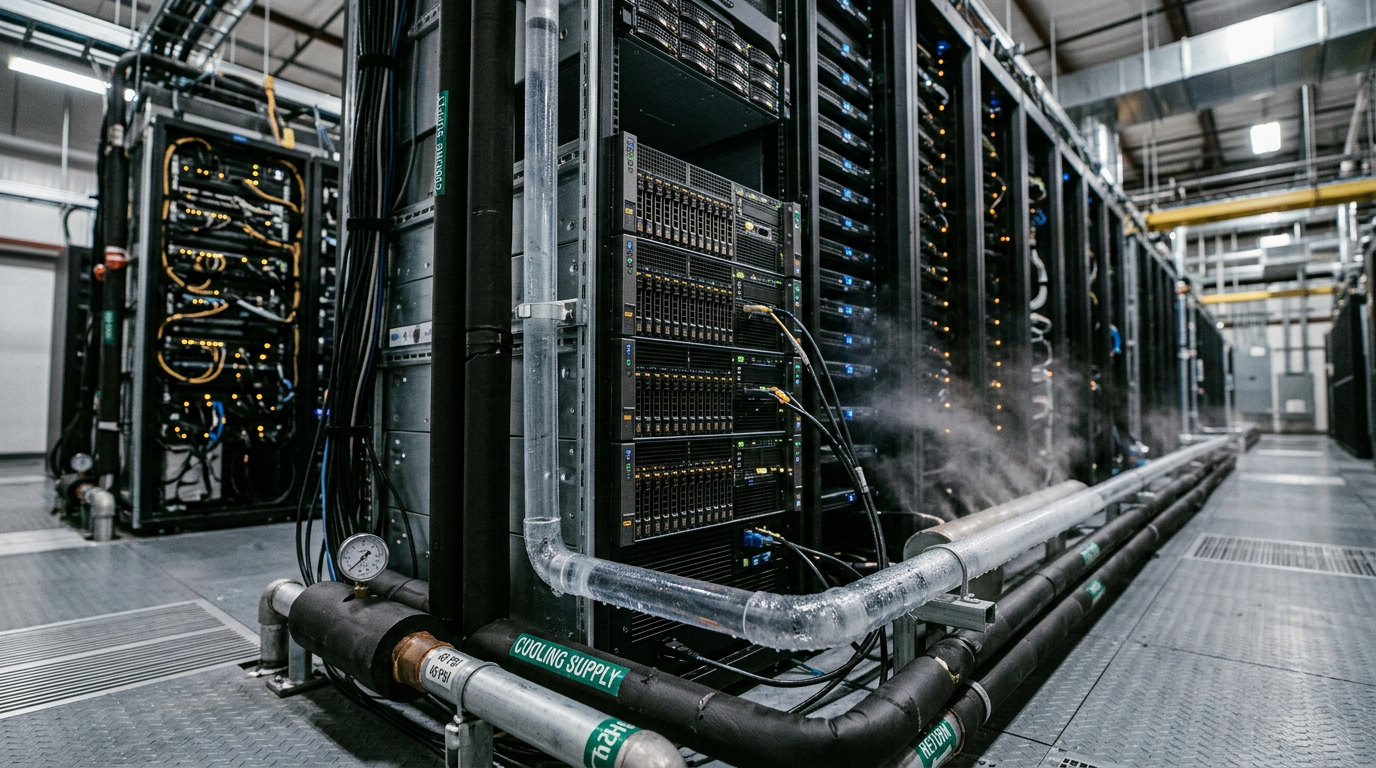
Not in a metaphorical sense. Literally. The servers generating that response run hot — far hotter than conventional computing — and the vast majority of hyperscale data centers cool those servers through evaporative cooling towers that bleed water into the air as vapor. The water doesn’t come back. It’s gone. And as AI workloads have scaled into the billions of daily queries, that water demand has quietly become one of the most significant and least-discussed infrastructure constraints in the technology industry.
Wall Street is still largely pricing this as a power story.
It isn’t only a power story anymore.
The Numbers Are Harder to Ignore Than They Look
Here’s the math, and it’s important to sit with it before moving on. U.S. data centers directly consumed 17.4 billion gallons of water in 2023. That figure is already enormous — but the trajectory is what changes the investment case entirely. A March 2026 study by researchers at UC Riverside and Caltech estimated that U.S. data centers could require between 697 million and 1.45 billion gallons per day of new water capacity by 2030 if current intensity holds. The same study valued the required new water infrastructure at somewhere between $10 billion and $58 billion, depending on growth assumptions — and that range assumes the AI buildout doesn’t accelerate further, which it almost certainly will.
A single hyperscale data center at 50 to 100 megawatts can consume 1 to 5 million gallons of water per day during peak summer operations. One facility. One day.
And here’s what makes this structurally different from the power story: roughly two-thirds of the data centers built since 2022 have been located in water-stressed regions, including hot, dry markets like Arizona and parts of the Southwest. In Q1 2026 alone, more than 75 data center projects worth approximately $130 billion were blocked by local opposition — as many as were blocked throughout all of 2025 — with water access emerging as a primary flashpoint alongside power availability.
What Nvidia Just Got Wrong
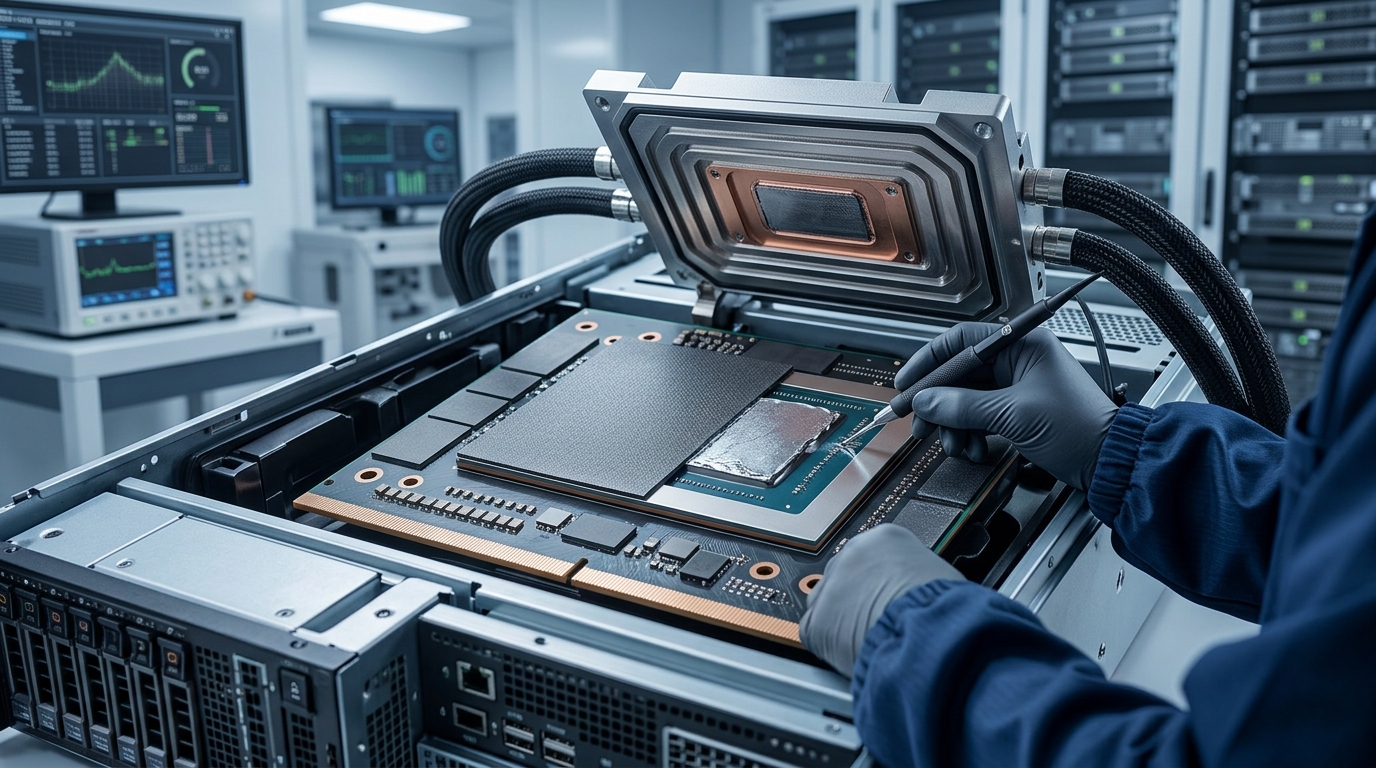
In late June 2026, Nvidia announced a warm-water cooling system designed to eliminate most on-site water usage inside a data center. The market treated it as a solution. It isn’t — at least not a complete one.
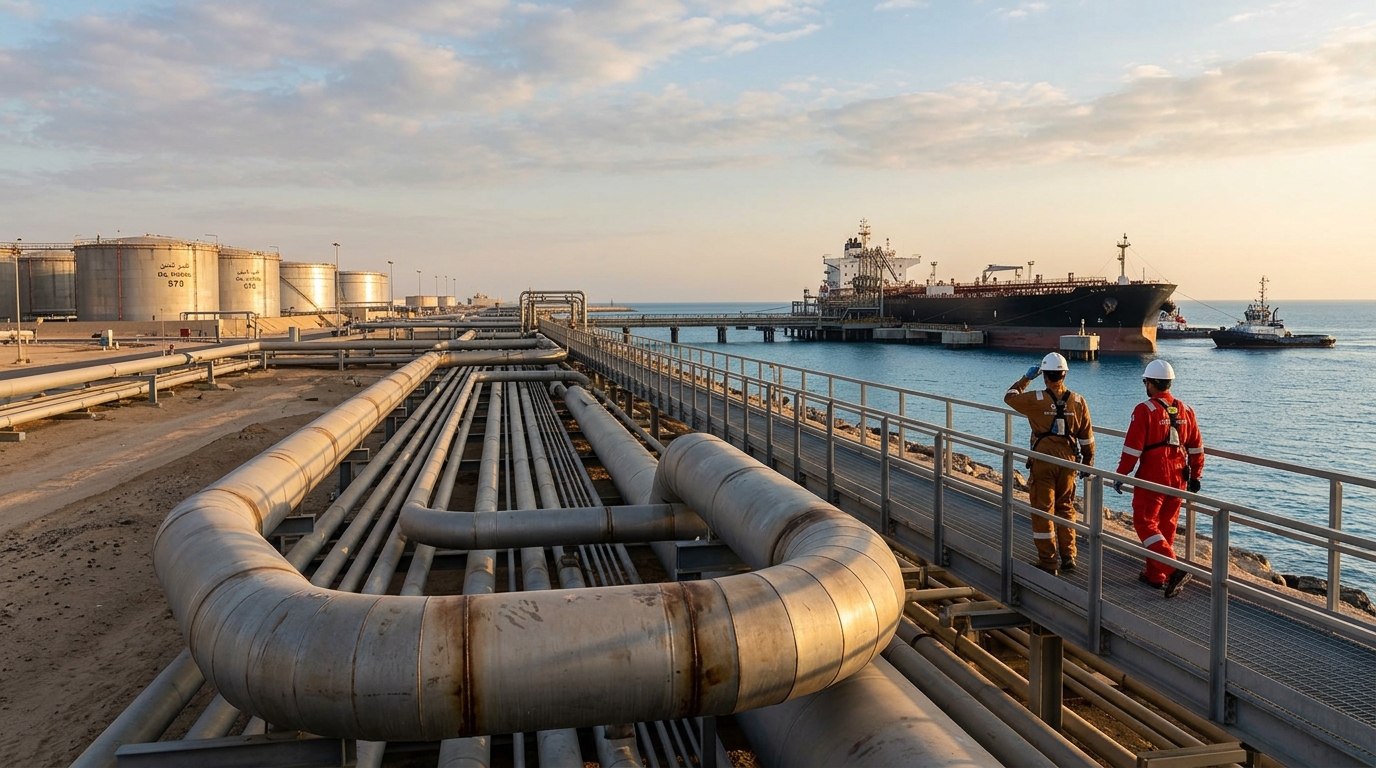
A 2026 analysis by Xylem and Global Water Intelligence found that direct data center cooling accounts for only about 4% of the additional water AI will demand by 2050. Power generation accounts for roughly 54%. Semiconductor fabrication accounts for the remaining 42%. Nvidia’s closed-loop cooling fix addresses roughly one-twentieth of AI’s projected total water demand growth when the full supply chain is included. The water problem doesn’t stop at the data center wall.
More efficient cooling per rack means cheaper construction. Cheaper construction means more data centers. More data centers means more aggregate water demand, even with per-unit efficiency gains. There is no documented historical example of a major computing efficiency improvement that produced a net reduction in total resource use at the system level. This is the Jevons Paradox, and it applies here.
So what actually fixes this?
Water Reuse Is Becoming a License to Operate
The answer the industry is gravitating toward is industrial water reuse. Not conservation in any abstract sense. Specifically: treating and recycling wastewater rather than drawing freshwater from increasingly contested municipal and groundwater sources. This is becoming the most politically defensible path for hyperscalers trying to get data center permits approved in water-stressed markets, and it received a major federal endorsement in April 2026 when the EPA launched its Water Reuse Action Plan 2.0 — a framework that specifically emphasizes reuse for data centers, industry, and energy providers. That plan arrived with essentially zero coverage from financial media.
Slight tangent, but it matters: this is the same dynamic that played out in semiconductor fabrication a decade ago. Chipmakers in water-stressed regions had no choice but to build closed-loop industrial water treatment systems directly into their operations. The cost was significant. The alternative was losing the right to operate. AI hyperscalers are arriving at the same inflection point, and the timeline is compressing fast.
Amazon is already building reclaimed water cooling systems at its Mississippi data centers with Veolia, targeting more than 83 million gallons of potable water savings per year per facility — with the design built to replicate globally. Google has committed to becoming water positive by 2030. AWS has set a goal of consuming 800 million gallons of recycled wastewater annually by 2030. Every one of these commitments requires industrial water treatment infrastructure to actually execute. None of it happens without the underlying technology stack.
The Company Sitting at the Intersection
Xylem (NYSE: XYL) is the largest pure-play water technology company in the world. Most investors know it as a slow-growth utility infrastructure name — pumps, pipes, meters, filtration systems for municipal water authorities. That framing isn’t wrong, but it misses where the growth is now accelerating.
In January 2026, Xylem published a landmark report with Global Water Intelligence projecting that AI’s water demand will surge nearly 130% by 2050, adding 30 trillion liters of annual demand by mid-century. The report also identified that global water systems currently lose an estimated 100 trillion liters annually through aging infrastructure — volumes that, if recovered through targeted investment, could substantially offset AI’s projected water demand growth. Xylem is not just describing the problem. It is selling the solution.
In late 2025, the company launched a dedicated suite of solutions for data center thermal water management. In Q1 2026, Xylem reported higher revenue and earnings driven by strength in utility solutions and industrial markets, tightening its full-year guidance on continued demand for water infrastructure and digital water solutions. On June 8, 2026, it expanded a long-term partnership with Dow Chemical to design, build, and operate advanced water systems at Dow’s large-scale industrial complex in Fort Saskatchewan, Alberta — exactly the kind of integrated contract that will become far more common as AI infrastructure strains local water supplies. The Evoqua acquisition completed in 2023 gave Xylem what no competitor had assembled in the same package: pumps, treatment systems, digital metering, and industrial process water expertise under one roof, and the synergy contributions from that integration are now showing up in operating margins.
The company also operates the Sensus portfolio — a leader in Advanced Metering Infrastructure — helping utilities transition to digital billing and leak detection. As data centers force utilities to manage new, concentrated demand spikes, real-time metering and leak control become more valuable, not less.
Why This Isn’t Consensus Yet
The market still reads Xylem as a slow-growth utility story. The AI angle is acknowledged in a handful of analyst notes but hasn’t entered the valuation conversation in any meaningful way. Here’s the reason it should.
The first-order AI trade is Nvidia. The second-order trade is power. The water reuse story is the third-order derivative — and it’s the one that hasn’t been priced because connecting it requires bridging three separate industries in sequence: AI compute, energy infrastructure, and industrial water treatment. Most analysts cover one of these verticals. Almost none cover all three together in the same model.
The structural logic: data centers need permits. Permits increasingly require water plans. Water plans require reuse infrastructure. Reuse infrastructure requires technology Xylem sells. The company doesn’t benefit from water scarcity abstractly — it benefits from the specific regulatory and operational pressure that forces large industrial customers to invest in systems they wouldn’t otherwise prioritize. That’s pricing power embedded in necessity.
And necessity, in infrastructure, tends to compound.
What to Watch
- Xylem’s next earnings report and any update to data center-specific contract activity and order growth
- EPA Water Reuse Action Plan 2.0 implementation progress and whether it produces regulatory mandates for large industrial water users
- Hyperscaler capital expenditure disclosures — specifically line items tied to water infrastructure, which have begun appearing separately from power spend in recent filings
- Regional water permitting battles around proposed data center campuses in Arizona, Texas, and the Southeast
- Competitor moves from Veolia, Ecolab, and smaller industrial water treatment specialists entering the data center vertical
The question isn’t whether AI has a water problem. The data on that is settled. The question is who gets paid to solve it — and whether the market has finished connecting those dots yet.
For informational purposes only.