Hey there, bargain hunter.
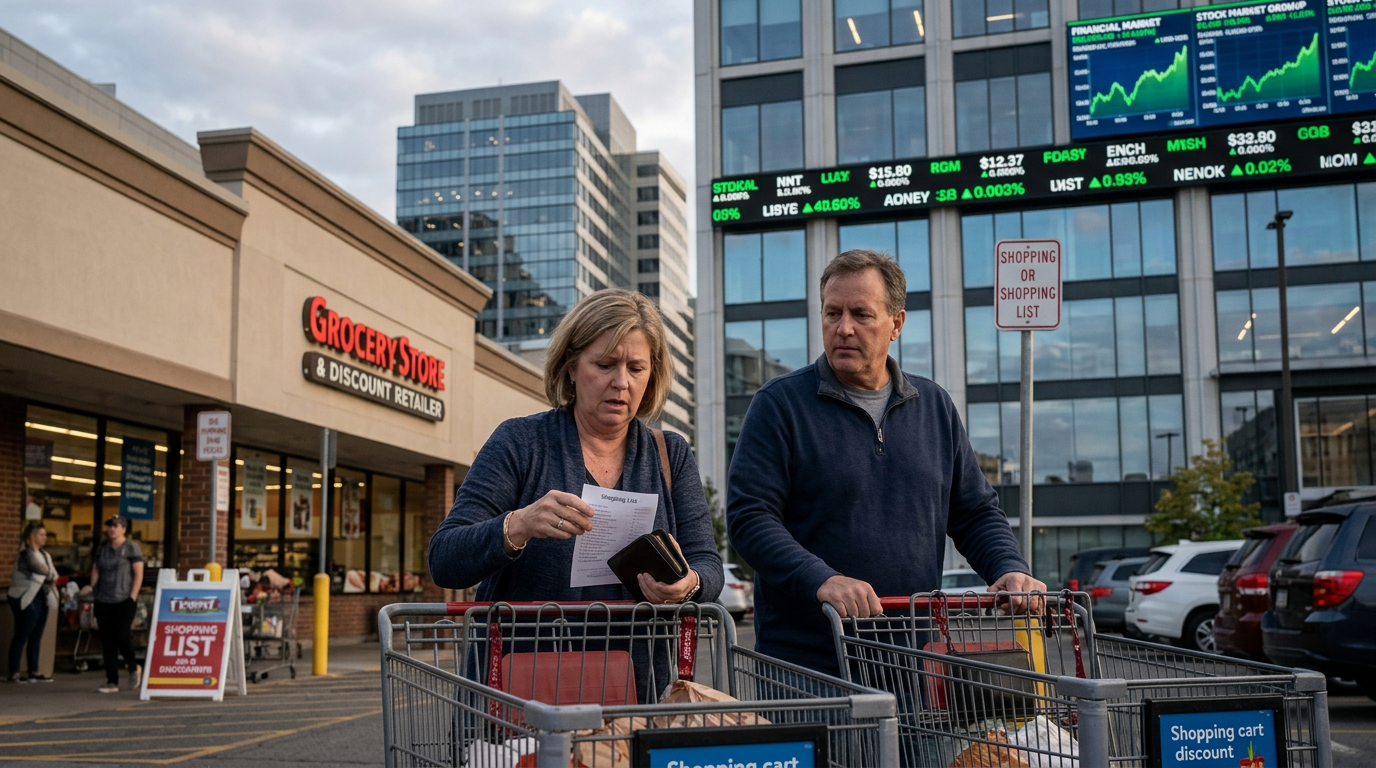
The University of Michigan’s final June Consumer Sentiment reading came in at 49.5. That is a recovery from May’s all-time low of 44.8. It also remains the second-lowest reading in data going back to the 1970s — below every reading during the 1970s oil crisis, the 2008 recession, and the COVID pandemic.
Sit with that for a second. Americans are more pessimistic about their finances right now than they were during the Great Financial Crisis. More pessimistic than they were in April 2020 when the economy was literally locked down.
And yet the S&P 500 is up roughly 23% over the past year.
The divergence between how people feel and how stocks trade is not new — sentiment and market performance have decoupled before. But the scale of this particular gap is remarkable, and it is worth understanding why it exists and what it might mean.
The driver is mostly energy. Operation Epic Fury — the U.S.-Israel coalition strike against Iran launched in late February 2026 — triggered a Strait of Hormuz supply disruption that pushed oil through roughly 20% of the world’s daily flow. Gasoline prices surged. For lower-income households, where gas represents a disproportionate share of weekly spending, the psychological damage was severe. Year-ahead inflation expectations hit 4.8% in May. They edged down to 4.6% in June but remain well above the 3.4% reading from before the conflict.
For over half of consumers surveyed — three months running — high prices are the first thing they mention when asked about their personal finances. Not jobs. Not stocks. Prices.
Here is what makes this confusing from a portfolio perspective. The top 10% of Americans hold more than 87% of corporate equities and mutual fund shares. When the S&P 500 is up 23%, that gain is highly concentrated in a narrow slice of households. Stock market gains boosted the personal finances of about 28% of consumers in the highest tercile of stock holdings in June — the highest share since January 2025 — compared with only 4% among those with the smallest holdings.
In other words: the market is not wrong, and consumers are not wrong. They are describing two different economies.
What happens next depends on one thing: oil. Sentiment will remain near historic lows unless gasoline prices fall meaningfully — and that requires tankers moving freely again through the Strait of Hormuz. The June improvement snapped a three-month streak of declines, but the underlying conditions have not changed. Long-run inflation expectations at 3.4% remain above the range the Federal Reserve has historically treated as consistent with rate cuts.
New Fed Chair Kevin Warsh, who took the helm on May 22, has limited room to maneuver. Core PCE above 3%. Year-ahead inflation expectations well above the Fed’s 2% target. A labor market that added 172,000 jobs in May — more than double expectations. The policy path is hold, probably through year-end.
The risk investors are underestimating is not that sentiment stays low. It is that the gap closes from the wrong direction — not because consumers start feeling better, but because equities start pricing in what consumers already know. Advancing shares are currently outnumbering declining shares even on down days for the major indexes, which is a healthy breadth signal. But that breadth is rotating away from mega-cap tech and into industrials, financials, and cyclicals — sectors that are more directly exposed to the consumer spending slowdown that sentiment data is already signaling.
Watch what consumer discretionary earnings say in Q2. That is where this gap between sentiment and stock prices will either narrow peacefully — or settle uncomfortably fast.