
The Iran conflict changed the energy equation fast. Since hostilities began in late February, international crude benchmarked from the low $70s to nearly $120 per barrel before settling into the low-to-mid $90s where it sits today. That move made energy the best-performing sector in the S&P 500 in 2026 — up roughly 25% against the broader index’s 2% gain.
Most investors chased the headline names. The quieter story is Diamondback Energy (NASDAQ: FANG).
Why the Permian Is the Right Zip Code
The Strait of Hormuz closure has eliminated roughly 20% of global petroleum exports, creating a structural supply deficit that analysts expect to persist well into 2027. That’s a Persian Gulf problem. And here’s the thing — Diamondback doesn’t operate there.
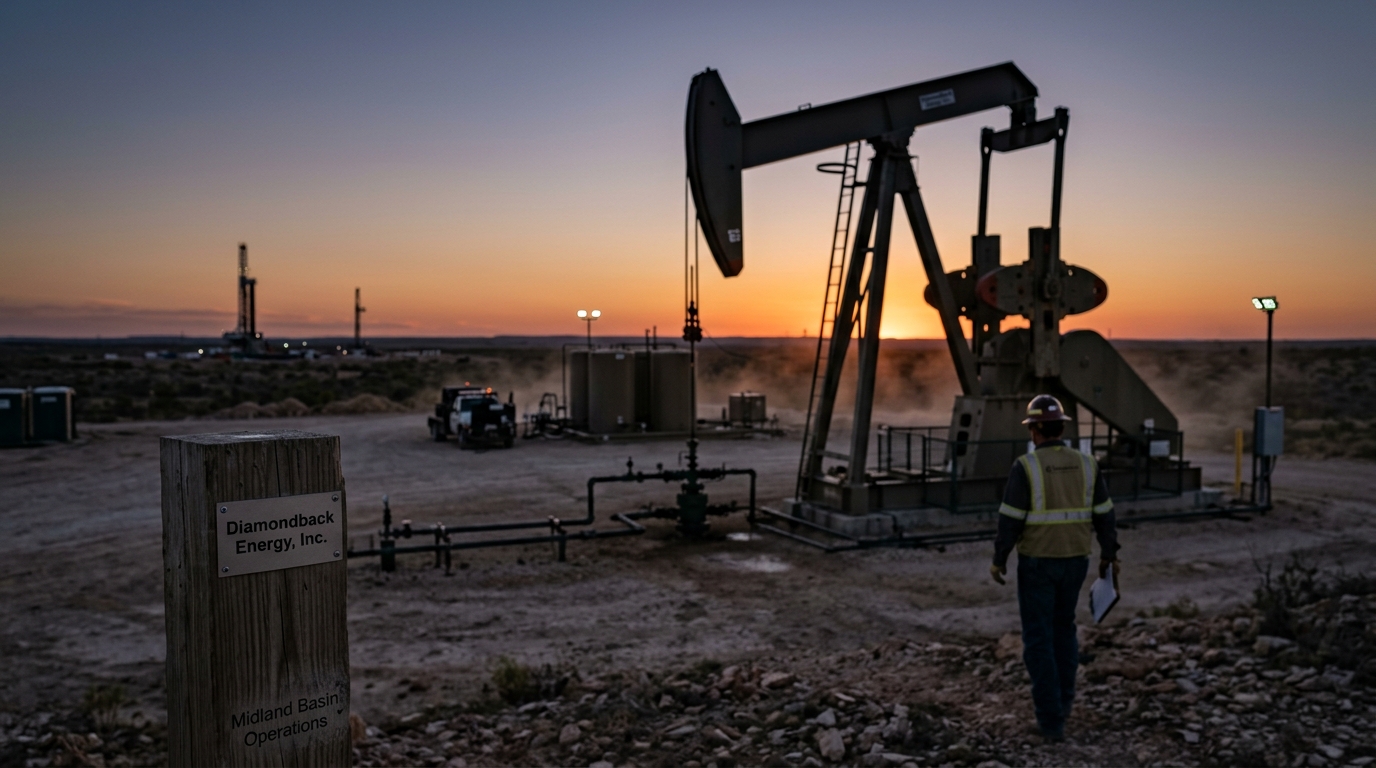
Diamondback is the largest pure-play independent producer in the Permian Basin, operating entirely in West Texas and New Mexico. Its output is geographically insulated from Middle East disruption. When Gulf supply gets choked, Permian producers don’t just survive — they benefit directly from the pricing premium that fills the gap.
The company’s low-cost production profile is what makes the math compelling. At current oil prices near $90+ per barrel, integrated majors and Permian independents alike are printing free cash flow at rates the market hasn’t seen in years.
The Numbers Are Hard to Ignore
Q1 2026 results told the story cleanly:
- Revenue: $4.24 billion — beat estimates by nearly 8%
- Adjusted EPS: $4.23 — beat by 13%
- Free Cash Flow: $1.7 billion in a single quarter
- Operating Cash Flow: $2.6 billion before working capital changes
- Average oil production: 521,000 barrels per day
The company raised its base dividend to $1.10 per share in Q1 — a 10% year-over-year increase — and returned $859 million to shareholders through dividends and buybacks, equal to about 50% of adjusted free cash flow. It still has $2.1 billion remaining in its repurchase authorization.
Full-year free cash flow margin has run around 30–37% in recent periods. For context: most S&P 500 companies across all sectors would call that exceptional.
Slight tangent — Diamondback’s CFO confirmed on the Q4 2025 earnings call that data center negotiations for natural gas offtake are actively progressing. He described it as “a new meaningful in-basin egress solution.” No deal announced yet. But when one is, it flows directly to the free cash flow line. That’s an optionality most investors haven’t priced in.
The Risk You Have to Respect
Energy is a commodity business. The bull case for FANG depends on oil prices staying elevated — and that depends on a conflict that could de-escalate. One credible Iran ceasefire deal could reverse the supply dynamic quickly, pulling crude back toward the mid-$70s and compressing margins significantly.
Goldman Sachs has warned that Brent could average over $100 per barrel through 2026 if the Strait of Hormuz remains restricted — but that’s a conditional forecast, not a guarantee. Investors need a clear-eyed view of what they own if peace breaks out.
The stock also trades at a premium to peers like EOG Resources and ConocoPhillips on an EV/EBITDA basis — a premium the market assigns for Diamondback’s scale and Permian positioning, but one that requires execution to justify.
What the Setup Actually Looks Like
30 analysts cover FANG with an average rating of Buy. The 12-month consensus price target implies roughly 20% upside from current levels. The annual base dividend has been raised to $4.20 per share, with a company commitment to return at least 50% of free cash flow to shareholders going forward.
At a free cash flow yield of 8–12% — significantly above market averages — the stock offers something rare: real cash generation at a valuation that doesn’t require the world to be perfect.
The energy trade in 2026 has been crowded at the top. The smarter question might be whether the quality names with actual balance sheet discipline — the ones still generating $1.7 billion of free cash flow per quarter while everyone argues about AI valuations — are getting enough attention.
That’s a question worth sitting with.