The headline said hold. The vote said something different entirely.
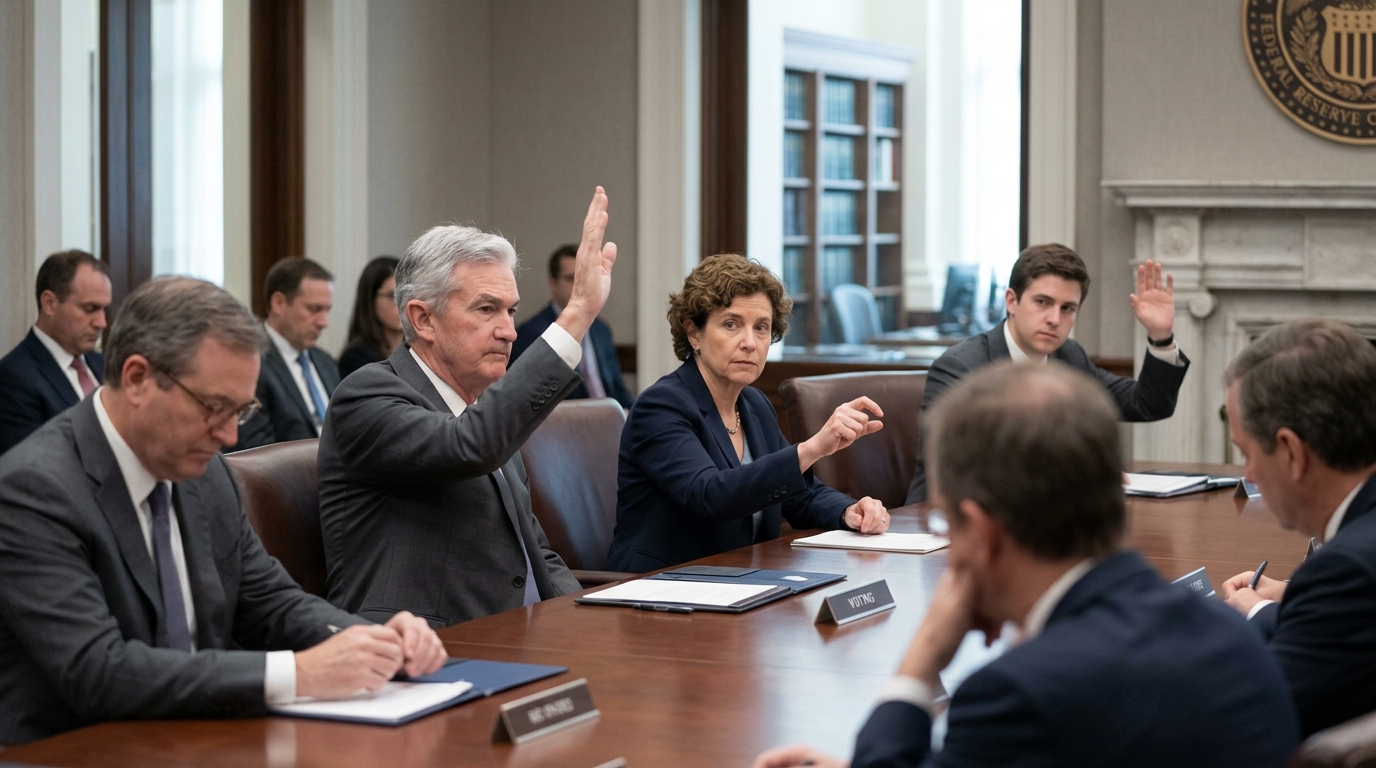
The Federal Reserve left its benchmark interest rate unchanged at 3.50%–3.75% on Wednesday, marking the fifth consecutive meeting without a policy change and the second under Chair Kevin Warsh. That part surprised nobody. Despite increasing support among some officials for a rate increase, the FOMC voted 9-3 to leave the federal funds rate in a range between 3.5% and 3.75%.
Three votes for a hike. That’s the number worth sitting with.
This is the first time since September 2016 that three policymakers dissented with a unified view of which direction rates should head. All of the dissenting votes came from regional presidents: Beth Hammack of Cleveland, Neel Kashkari of Minneapolis, and Lorie Logan of Dallas, who had been the most explicit about the need for higher rates to address inflation that has been above the Fed’s 2% target for more than five years.
What Warsh Actually Said
“I asked for a good family fight, and I got one,” Warsh said during a press conference after the Fed’s announcement, describing an animated discussion among officials, noting that the main point of division was over the best way to lower prices.
He was not soothing. Warsh repeatedly said the central bank is committed to reining in inflation. “Let me reiterate: There is no soft inflation target,” he said. “There is no soft implicit target, not on this committee’s watch. There’s only a target, and it’s 2%.” The bond market called his bluff with a message back: Show us you mean it.
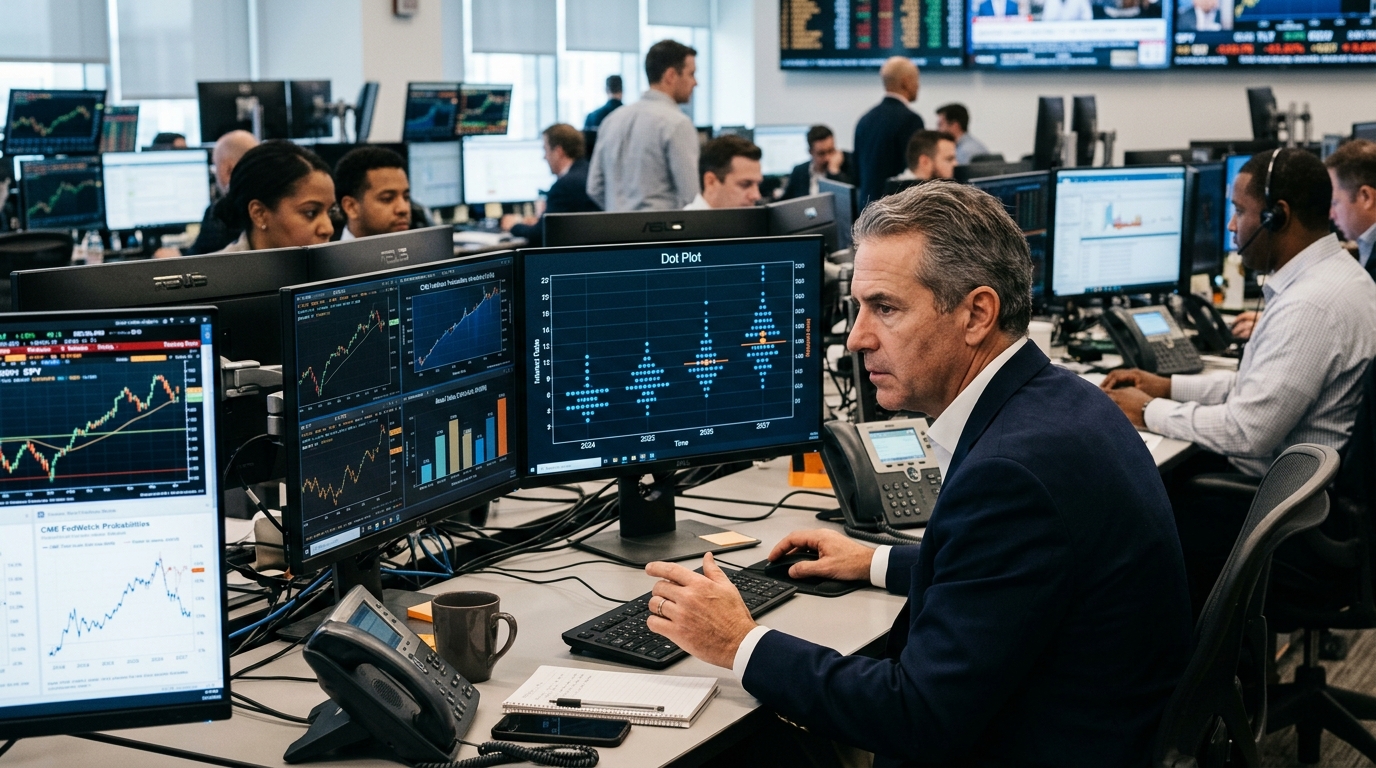
The decision was the second under the leadership of Fed Chair Kevin Warsh, who has removed forward guidance from the FOMC’s post-meeting statements. That’s deliberate. With Warsh staying away from anything even remotely smelling of forward guidance, there was unusual uncertainty in the markets about the outcome of this FOMC meeting. The CME FedWatch Tool assigned a 33.7% chance of a rate hike and a 66.3% chance of a hold still hours before the release of the FOMC statement.
The Bond Market’s Verdict
Stocks sold off. Bonds sold off harder. And the long end of the curve moved in a way that should be on every trader’s radar right now.
Long-term bond yields surged during Warsh’s remarks, with the 30-year Treasury yield jumping to 5.21%, its highest level since 2007. The 10-year yield jumped to almost 4.69%, nearing its highest level in over a year. The two-year yield, which tracks expectations for Fed policy, fell four basis points to 4.24%.
That yield curve behavior tells you something specific. Traders aren’t pricing an imminent hike as their base case. They’re pricing persistent inflation and a Fed that is slower to respond than the dissenters want. That’s a different and, frankly, more troubling read for equities.
Treasury markets reacted strongly as bond yields spiked, sending the 30-year yield to its highest level since 2007. Stocks also accelerated losses on Wednesday, and the Dow closed 1,100 points lower in its worst day in over a year.
Increases in real yields push up required returns, even with little movement in inflation compensation. This typically benefits cash and short-term debt while disadvantaging long-duration bonds and high-valuation stocks.
What September Looks Like Now
Here’s where it gets genuinely interesting. The decision itself did not hike rates. But the vote structure moved the September probabilities sharply.
Interest-rate swaps reflected a roughly 60% probability that officials led by Chairman Kevin Warsh will boost borrowing costs in September after the decision, even as some officials signaled growing conviction that a hike would be needed to control resurgent inflation. A hike is fully priced in for December.
Ellen Zentner, chief economic strategist at Morgan Stanley Wealth Management, wrote in a note that the hike hasn’t been canceled, just postponed: “It’s likely that market pricing for a hike has simply been pushed forward. September remains a live meeting, and the incoming inflation data between now and then will be all that matters.”
Slight tangent, but it matters: Bank of America economists expect the Federal Reserve to raise interest rates three times in the second half of 2026, citing stronger-than-expected job growth, stubborn inflation, and rising energy prices as the main reasons for the shift. The bank projects 25-basis-point increases in September, October, and December, which would lift the federal funds rate from its current 3.50%–3.75% range to 4.25%–4.50%. Deutsche Bank sees two hikes, one in September and one in December. That’s a wide range of forecasts. Which means positioning is genuinely difficult.
The Sectors That Actually Matter Now
This is where the real trade conversation starts. Three different parts of the market face distinct problems if September becomes a hike.
REITs and rate-sensitive real estate. Prologis provides exposure to logistics real estate at global scale, but the situation may be uncomfortable for investors focused on interest rates. A sharp move higher in Treasury yields tends to weigh on REIT funding costs and appraised values, and management has already flagged US valuation pressure when long-term yields moved up in prior periods. Homebuilders are directly exposed to rising mortgage costs that can reduce demand and lead to heavier incentives, which are already pressuring margins and earnings.
The 30-year fixed mortgage rate last week rose to 6.58%, its highest level in almost a year. That number already has gravity. Another 25 basis points from the Fed pushes it higher still.
Utilities. Utilities are sensitive to interest rates, on the theory that rising rates constrain capital spending plans. The AI power demand thesis that drove utility stocks higher through early 2026 now faces a direct headwind from borrowing cost arithmetic. Long-duration infrastructure projects reprice when the long end of the curve moves.
Banks and financials. This one cuts both ways. Typically, rising rates are good for banks that are able to earn more money off loans. Net interest margins expand in a hiking cycle, which is a genuine positive for the regionals and mid-cap banks. The counterweight is credit quality, particularly if higher rates start squeezing commercial real estate borrowers.
Growth stocks broadly. Rising rates also reduce household spending, deflate growth stock valuations, and are generally negative for investments that rely on debt financing, including small caps. The tech-heavy Nasdaq has already felt this. QQQ has been down six straight days and down 9% in July. The tech sector in the S&P (XLK) is down 11% this month.
The Checklist Before September 15
Two dates matter above all others in the next seven weeks.
The July CPI report, due August 12, will be the single most important data point between Wednesday’s decision and the September meeting. If July CPI confirms that the energy-driven June relief was real and that inflation is genuinely moderating, September hike odds will likely fall back. If July CPI shows renewed energy-driven acceleration, a live possibility given oil’s July surge above $80 per barrel, the odds will push higher still.
Warsh is expected to speak at the Jackson Hole Economic Policy Symposium August 27-29 in Wyoming. His speech will be closely watched for signals about how the Fed’s monetary policy approach may evolve. Given his explicit refusal to provide forward guidance all year, do not expect clarity. Expect volatility around whatever he says.
The committee’s growing hawkish sentiment, shown by the three dissents, has also likely been exacerbated by the recent flare-up in hostilities in the Middle East. Oil prices have surged in recent weeks, topping $100 a barrel last week, suggesting that inflation may remain a stubborn issue in the near term. The oil price trajectory is a third input that could settle this debate before either CPI reading even drops.
The bottom line: the hold was not a green light. Three dissenters, a Dow down 1,100 points, and a 30-year yield at a 19-year high are not the ingredients of a market that believes the coast is clear. September is a live meeting, the data between now and then is what decides it, and rate-sensitive sectors are already repricing for the possibility that this tightening cycle is not finished.