Four words. That’s all it took.
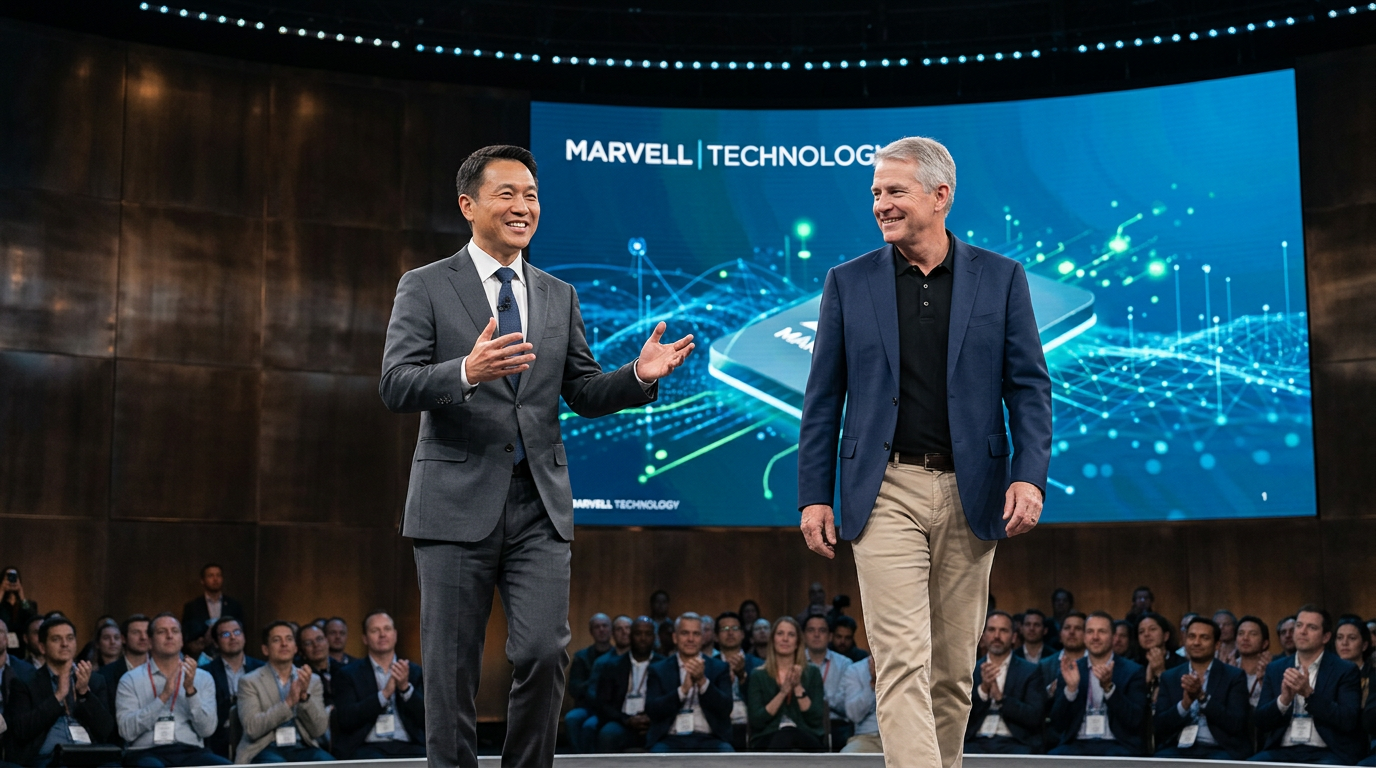
At Computex 2026 in Taipei on June 2, Nvidia CEO Jensen Huang joined Marvell CEO Matthew Murphy onstage and, in front of a live audience, declared Marvell Technology “the next trillion-dollar company, ladies and gentlemen.” The market responded immediately — shares surged more than 32% by close, the biggest single-day gain in the company’s history.
Worth pausing on that for a second. A 30-year-old semiconductor firm added tens of billions in market cap because the most credible voice in AI chips pointed at it. That’s not hype — that’s a signal worth dissecting.
What Huang Actually Said — and Why It Matters
Huang’s case wasn’t vague flattery. It was specific. He argued that Marvell’s networking and connectivity chips are essential to modern AI data centers, where computing tasks are distributed across thousands of interconnected chips that need to share data at massive speeds. When you disaggregate a computing problem across an entire data center, what you need most is connectivity. That’s Marvell’s lane.
Nvidia had already put money behind this view — investing $2 billion in Marvell earlier this year as part of efforts to make its AI systems interoperate more seamlessly with Marvell’s custom silicon. The Computex appearance wasn’t a cold endorsement. It was a continuation of a deepening commercial relationship.
The Business Behind the Surge
Marvell isn’t a household name, but it’s a serious company. Founded in 1995 and headquartered in Santa Clara, it designs semiconductors for data centers — specifically high-performance networking chips and custom AI accelerators (ASICs) that cloud providers use when they want purpose-built silicon instead of off-the-shelf GPUs.
- Q1 FY2027 Revenue: $2.418B — up 28% YoY, $18M above guidance midpoint
- Custom Chip Revenue Target: More than $10 billion in annual revenue projected by fiscal 2029
- Market Cap at Huang’s comments: ~$191B — jumped to ~$234B the same day
- 52-Week Gain: +636% entering June 2026
The custom chip business is the core of the bull thesis. Cloud providers — the hyperscalers building out AI infrastructure — increasingly want chips designed specifically for their workloads, not generic GPUs. Marvell is positioning itself as the partner that makes that possible at scale.
The Honest Part People Skip
Reaching $1 trillion from ~$191 billion requires Marvell’s stock to climb more than 400% from where it stood before Huang spoke. That’s not a short-term trade — it’s a multi-year thesis. For context, Nvidia itself had a market cap of $323 billion at the start of 2020 and didn’t cross $1 trillion until May 2023. The path is real, but it is not fast, and it is not guaranteed.
The other thing worth noting: the stock had already gained 265% in the prior year before Computex. Momentum is powerful until it isn’t. Jim Cramer flagged the 26%+ single-day spike as concerning precisely because sentiment-driven moves can unwind sharply when the narrative cools. Broadcom’s post-earnings drop this same week is a live reminder of what happens when AI expectations outpace delivery.
Bull / Base / Bear
- Bull: Custom chip revenue hits $10B+ run rate by FY2029 on schedule, hyperscaler capex holds firm, and Nvidia’s backing accelerates customer adoption. Stock re-rates toward $150–$175 range on forward multiples.
- Base: Marvell consolidates recent gains, digests the surge, and grows into its valuation through steady quarterly execution. The Huang effect fades but the business case remains solid.
- Bear: Hyperscaler AI capex cools, custom chip timelines slip, or Broadcom-style guidance disappointments spook the broader sector — pulling MRVL back toward pre-Computex levels near $85–$90.
Bottom Line
Jensen Huang doesn’t hand out trillion-dollar labels casually. The fact that Nvidia has both invested in Marvell and publicly backed its leadership is a data point that deserves weight. What’s interesting is that this story isn’t really about one speech — it’s about where AI infrastructure spending goes after the GPU buildout matures. Marvell is betting that the next phase belongs to custom silicon and high-speed connectivity. Huang is saying he agrees. The question for investors is how much of that future is already in the price — and how much patience they have for the gap between here and $1 trillion.
For informational purposes only.