By Maya Gebeily, Laila Bassam, Alexander Cornwell and Humeyra Pamuk
BEIRUT/TEL AVIV/WASHINGTON, April 16 (Reuters) – U.S. President Donald Trump said on Thursday that Israel and Lebanon had agreed to begin a 10-day ceasefire at 5 p.m. EST (2100 GMT), signalling a pause in Israel’s conflict with Iran-backed Hezbollah that has raged in parallel to the war with Iran.
A U.S. official said the ceasefire would start on Thursday.
Israel’s campaign in Lebanon has emerged as a major obstacle to securing a peace deal sought by Trump to end the war on Iran he launched with Israel in late February, which has disrupted the global energy trade, spiking oil prices and risking further economic fallout. U.S. and Iranian officials are weighing a second round of in-person talks in Islamabad in the coming days and a cessation of fighting in Lebanon could clear the way for an agreement on other tricky issues including Tehran’s nuclear ambitions.
Pakistan’s Foreign Ministry earlier said that peace in Lebanon was essential for talks it is mediating.
Trump said he had held excellent conversations with both Lebanese President Joseph Aoun and Israeli Prime Minister Benjamin Netanyahu.
Netanyahu said in a video statement he had agreed to the 10-day pause and that there was an opportunity to make an historic deal with Lebanon.
But there was uncertainty over whether a truce could hold between bitter enemies Israel and Hezbollah. Netanyahu said in his video message he had not agreed to Hezbollah’s demand to withdraw forces deployed in southern Lebanon back to the international border between the two countries and would maintain an extensive “security zone” up to the border with Syria.
Israel’s main demand remained that Hezbollah must be dismantled, he added.
In its first comment after Trump’s announcement, Hezbollah said any ceasefire must not allow Israel freedom of movement within Lebanon. In a statement issued by its media office, the group said the presence of Israeli troops on Lebanese territory granted Lebanon and its people the “right to resist”.
‘BUFFER ZONE’
Lebanon was dragged into the war in the Middle East on March 2, when Hezbollah opened fire in support of Tehran, prompting an Israeli offensive in Lebanon just 15 months after the last major conflict between the group and Israel.
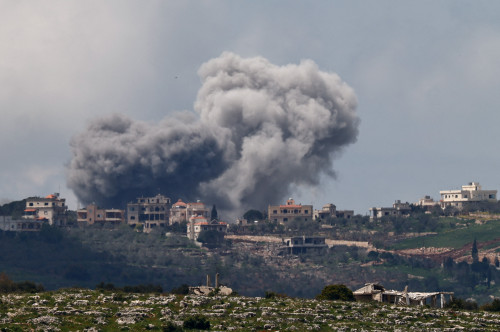
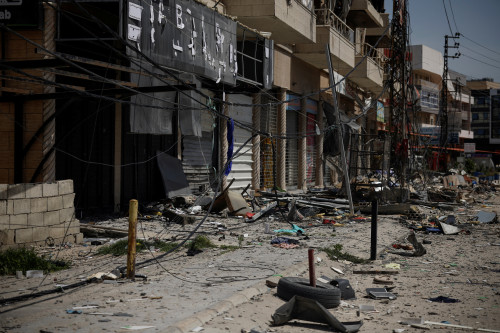
Israeli attacks have killed more than 2,100 people in Lebanon since March 2 and forced more than 1.2 million to flee, Lebanese authorities say. Hezbollah attacks have killed two Israeli civilians, while 13 Israeli soldiers have died in Lebanon since March 2, Israel says.
Israeli forces have invaded areas of southern Lebanon, and vowed to maintain control over territory extending all the way to the Litani River, which meets the Mediterranean some 30 km (20 miles) north of Israel’s border. Israel ordered residents out of the area south of the Litani during the war.
Israeli troops have since destroyed Lebanese villages in the area, saying their aim is to create a “buffer zone” to protect northern Israeli towns from Hezbollah attacks.
In Beirut, Lebanese doctor Fadi Sharara told Reuters he wasn’t optimistic about the ceasefire’s prospects. “I don’t think it will succeed because it’s impossible for Hezbollah to surrender its weapons and (Hezbollah) doesn’t have trust in that,” Sharara told Reuters.
Senior Hezbollah lawmaker Hassan Fadlallah, speaking to Reuters minutes before Trump’s announcement, said the group had been informed by Iran’s ambassador to Lebanon that a ceasefire could begin on Thursday evening. After the announcement, he said it would be for 10 days.
Asked if Hezbollah would commit to the truce, Fadlallah said everything depended on Israel halting all forms of hostilities, and credited Iran’s diplomatic efforts for the possible ceasefire.
BEIRUT AT ODDS WITH HEZBOLLAH
The Lebanese government has been sharply at odds with Hezbollah over its decision to enter the war, having spent the last year seeking to secure the peaceful disarmament of the group founded by Iran’s Revolutionary Guards in 1982.
Israeli and Lebanese ambassadors held rare talks in Washington on Tuesday, despite objections from Hezbollah.
Lebanon’s Prime Minister Nawaf Salam welcomed Trump’s ceasefire announcement, saying it has been Lebanon’s main demand throughout the war.
Trump said he had directed U.S. Vice President JD Vance, Secretary of State Marco Rubio and Chairman of the Joint Chiefs of Staff Dan Caine to work with the two countries to achieve lasting peace. “Both sides want to see PEACE, and I believe that will happen, quickly!” he said in a post on Truth Social.
In another social media post, Trump said he would be inviting Netanyahu and Aoun to the White House for “meaningful talks” between the two countries, which have remained in an official state of war since Israel was established in 1948.
Trump had earlier said that Lebanese and Israeli leaders would speak on Thursday for the first time in decades. However, Lebanese officials said Aoun did not speak with Netanyahu on Thursday, and that Lebanon’s U.S. embassy had informed Washington he would not speak to him in the near future.
BATTLE FOR BORDER TOWN
Speaking to Reuters again after Trump’s announcement, Hezbollah lawmaker Fadlallah said Lebanese displaced from the south should wait for the ceasefire to take hold and be extremely cautious in villages occupied by Israeli troops.
Fighting continued to rage in south Lebanon on Thursday, notably in the border town of Bint Jbeil, a Hezbollah stronghold and strategic prize. A senior Lebanese official said Lebanon believed Israel wanted to secure a victory in Bint Jbeil before diplomatic progress could be made.
An Israeli strike destroyed the last bridge over the Litani River into the south, a senior Lebanese security source said, severing the area from the rest of the country after Israel destroyed other crossings during the war.
(Reporting by Emily Rose, Steven Scheer and Alexander Cornwell in Jerusalem and Maya Gebeily and Sherif Fahmy in Beirut, Jana Choukeir and Tala Ramadan in Dubai, Saad Sayeed in Islamabad; Reporting by Humeyra Pamuk, Steve Holland, Katharine Jackson and Bhargav Acharya in Washington; Writing by Tom Perry and Simon Lewis; Editing by William Maclean, Aidan Lewis and Daniel Wallis)