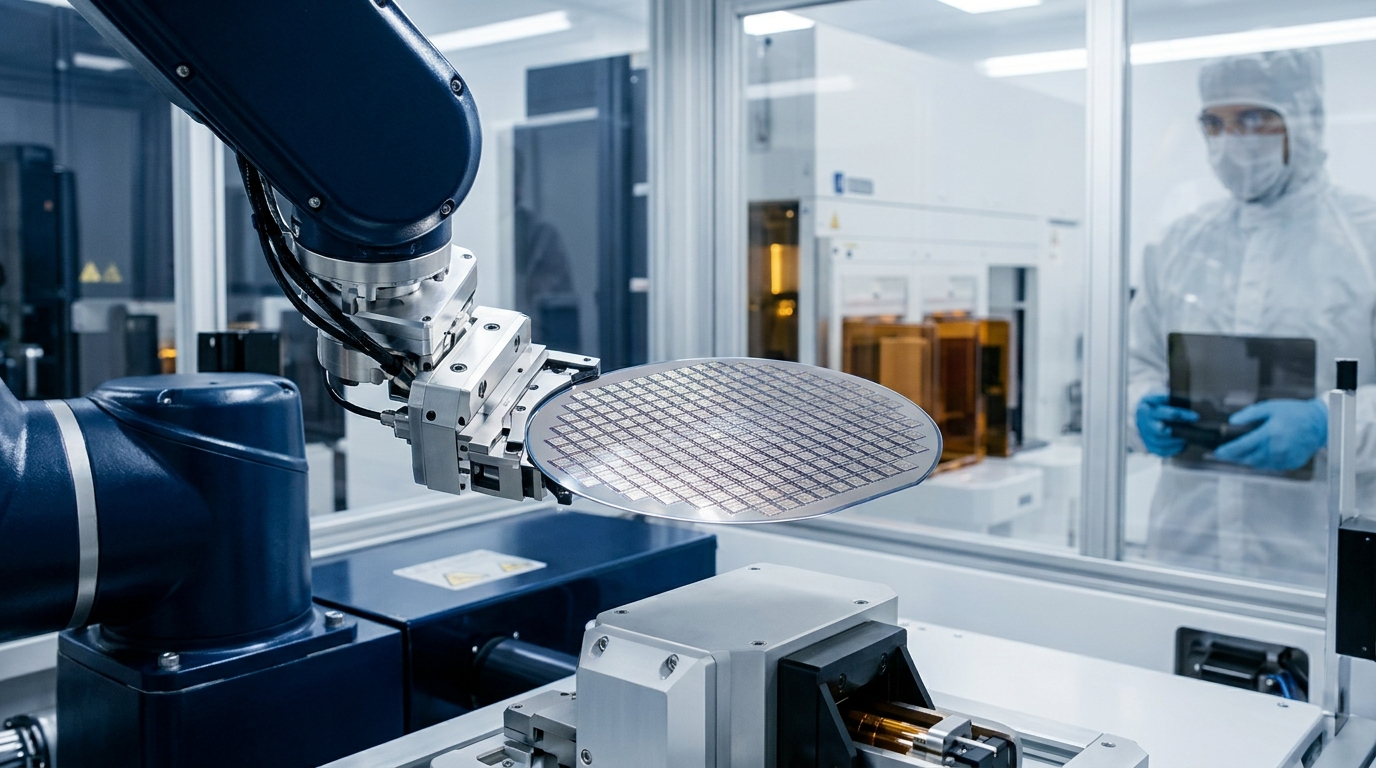
Micron Technology posted $84.97 billion in net income last fiscal year, more than ten times what it earned in fiscal 2025. Its memory is largely spoken for into 2027. The demand story is as clean as it gets in semiconductors. What is not clean is a wage dispute on the outskirts of Taipei that has now reached Taiwan’s executive branch.
Micron’s labor dispute in Taiwan has intensified over its incentive-pay system, raising concerns that the standoff could undermine foreign investment confidence, as Idaho Governor Brad Little visits the island. Premier Cho Jung-tai has been publicly urged to help address the dispute after the Taoyuan union petitioned the Executive Yuan. That a head-of-government office is now part of the story signals this is no longer a standard collective bargaining negotiation.
What Is Actually Paused
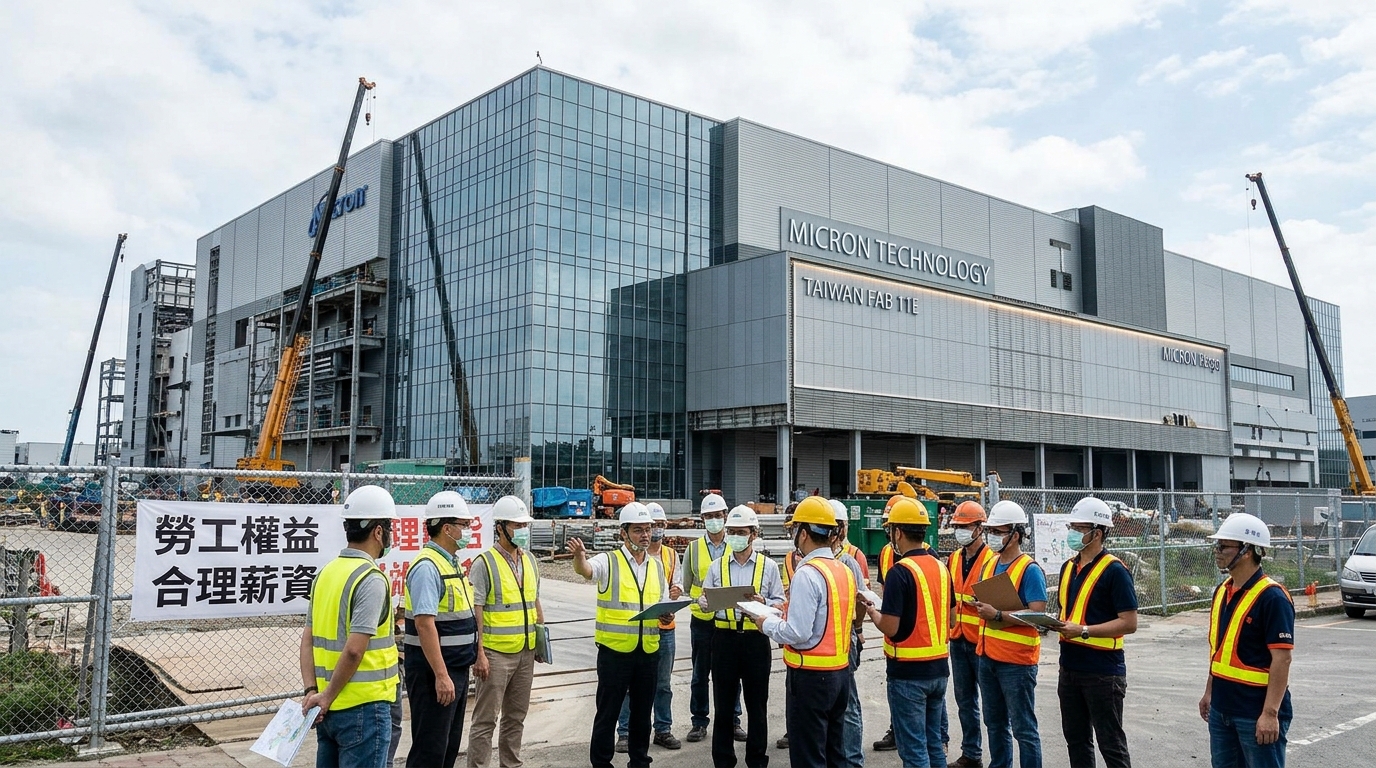
Construction activity at the Fab 11E site in Taoyuan has been suspended amid “mounting uncertainties,” including Micron’s concern that an agreement it struck with a separate union could be overturned. Fab 11E was intended to make high-bandwidth memory and DRAM using top-end equipment from ASML, and had been slated to come online in 2028. Micron and the Taoyuan union resumed mediation talks on November 17, 2026 but failed to reach an agreement, with differences remaining over the proposed collective bargaining agreement.
Almost 70 percent of union members at the Taoyuan site rejected the offer put forward by management, calling for clearer profit-sharing arrangements and terms for bonuses. Micron posted record net income of $84.97 billion for the fiscal year ended September 3, 2026, up from $8.54 billion the year before, making management’s argument that there is limited room for worker compensation a difficult one to sustain. Workers are starting to realize the leverage they hold in a supply chain that feeds some of the most valuable infrastructure on earth.
Why the Location Matters
Micron has invested around $50 billion in Taiwan over the last three decades. Taiwan currently accounts for about 60 percent of Micron’s global DRAM output and a large slice of its high-bandwidth memory production. That is not a footnote to this dispute. It is the central fact.
Micron itself has disclosed that a substantial portion of its output comes from Taiwan, and that any loss of output could have a material adverse effect on the company. The paused fab is not yet causing that loss, but it delays the incremental capacity Micron will need to fulfill what it is currently negotiating for 2028.
The Capacity Paradox
Micron delivered record fiscal 2026 revenue of $133.19 billion and GAAP net income of $84.97 billion, with CEO Sanjay Mehrotra saying the company expects an even stronger fiscal 2027. On its fiscal fourth-quarter 2026 earnings call, Micron said more than 75 percent of its 2027 output is already committed, with customer talks now covering 2028. Against that backdrop, a construction halt at the facility meant to serve that 2028 demand is a supply-side problem the market cannot price away.
The suspension of Fab 11E could create additional problems for the memory market if it turns into a longer-lived constraint on supply. Separately, Micron is moving ahead with investments in Singapore, where it is expanding NAND manufacturing capacity with approximately $24 billion in investment planned over ten years and initial wafer output scheduled to begin in the second half of calendar 2028.
The Broader Signal
All four of the large U.S. memory and storage stocks were down 12 percent or more this past week, and the VanEck Semiconductor ETF was down 9 percent, according to market reporting on Friday. Micron fell sharply even though more than 75 percent of its 2027 output is already committed. The gap between the fundamental demand story and what the equity is doing is wide enough to notice.
The question for investors is not whether this week’s selloff is fair. It rarely is. The question is whether a labor dispute that now involves Idaho’s governor, Taiwan’s premier’s office, and an as-yet unresolved mediation is a one-quarter distraction or a signal that the cost of Micron’s AI-era windfall is about to be shared more broadly with the people building it. Taiwan accounts for about 60 percent of Micron’s global DRAM output and hosts about 15,000 of its employees. Micron has said it will keep talking with the Taoyuan union, and Taiwan’s government has indicated it is offering support. Neither side has suggested the project is dead. But at the speed memory demand is compounding, every month of construction delay is a month of capacity that cannot be recovered.