By Leika Kihara
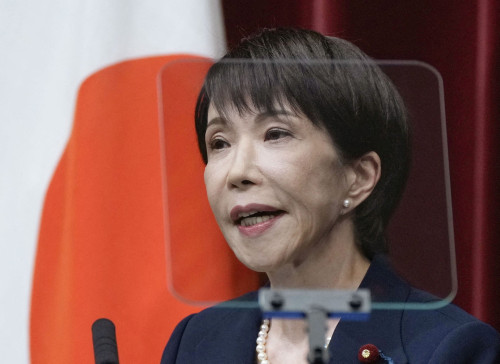
TOKYO, Jan 23 (Reuters) – Japanese Prime Minister Sanae Takaichi’s decision to call a snap general election on February 8 to seek voter backing for her reflationist policies pushed bond yields to multi-decade highs, driven by rising concern over the country’s worsening finances.
Below are key economic policies proposed by each party, based on their election campaigns and comments from executives:
LIBERAL DEMOCRATIC PARTY (LDP)
Since succeeding her predecessor Shigeru Ishiba, Takaichi has been the dominant force behind the ruling LDP’s pursuit of more aggressive spending plans and is seeking to water down a long-held fiscal austerity target.
While Takaichi nodded to the Bank of Japan’s interest rate hike in December to slow unwelcome yen falls, an election win could embolden her reflationist advisers to warn against further increases in borrowing costs for fear of cooling economic growth.
Takaichi promised to end what she saw as “excessively” tight fiscal policy and vowed to suspend an 8% levy on food sales for two years. She ruled out issuing additional debt but was vague on how the government will fill the revenue shortfall.
In its manifesto, the party said it will “accelerate work” towards achieving the tax suspension including by discussing with other parties when to implement the cut and how to fund it.
It also said Japan will achieve a strong economy with sustainable fiscal policy “to ensure the yen continues to maintain market trust.”
Analysts say Takaichi’s fiscal policies would fuel already above-target inflation and do little to help an economy grappling with labor shortages and supply constraints, rather than weak demand.
JAPAN INNOVATION PARTY (ISHIN)
The right-wing party helped Takaichi secure enough votes in parliament to be elected as premier in October and formed a ruling coalition with the LDP.
Ishin has traditionally focused on deregulation and cuts to wasteful spending. But it is also calling for suspending by two years an 8% levy on food sales as part of a policy agreement with the LDP. It says Japan will seek ways to fund the step without issuing additional debt.
CENTRIST REFORM ALLIANCE (CRA)
Formed between the largest opposition Constitutional Democratic Party of Japan and another opposition party Komeito, CRA describes itself as a party seeking middle ground on issues including economic policy in a fragmented world.
It calls for permanently abolishing from autumn this year the 8% consumption tax levied on food sales, and initially tapping government reserves to fund the move.
As a longer-term step to fill the revenue shortfall, the party proposes creating a sovereign wealth fund that can generate profits by investing government reserves and the Bank of Japan’s holdings of exchange-traded funds (ETFs).
The party also aims to correct “excessive” yen weakness that is accelerating inflation and is focused on lowering prices for daily necessities such as food and fuel.
DEMOCRATIC PARTY FOR THE PEOPLE (DPP)
The party is led by former finance ministry bureaucrat Yuichiro Tamaki, who has increased its seats in past elections by pledging to give households more purchasing power including by expanding tax exemptions.
The party proposes issuing 5 trillion yen ($31.58 billion) in “education” bonds each year to double spending on child care, education and scientific research.
It also calls for lowering the consumption tax rate to 5% until wage growth stably exceeds the inflation rate.
In an interview with Reuters, Tamaki said Japan should cut the consumption tax rate only if the economy worsens due to weak demand, arguing that it cannot be executed quickly enough to give households immediate relief from rising living costs.
He said the BOJ should continue to raise interest rates if small and midsized firms can sustainably achieve wage hikes of around 5%.
SANSEITO
Once a fringe far-right party, Sanseito emerged as one of the biggest winners in an upper house election last July with its “Japanese First” campaign meant to rebuild people’s livelihoods by resisting globalism.
The party calls for abandoning the consumption tax altogether and overhauling what it sees as “tight” fiscal policy by ramping up spending.
On monetary policy, its leader Sohei Kamiya said the BOJ may be raising interest rates too rapidly and should tread carefully on further hikes to avoid hurting a fragile economy.
He also said while central bank independence was important, focusing too much on protecting it could have a negative impact on the economy, if doing so prevented the BOJ from aligning with the government’s expansionary fiscal policy.
($1 = 158.3500 yen)
(Reporting by Leika Kihara; Editing by Shri Navaratnam and Jamie Freed)